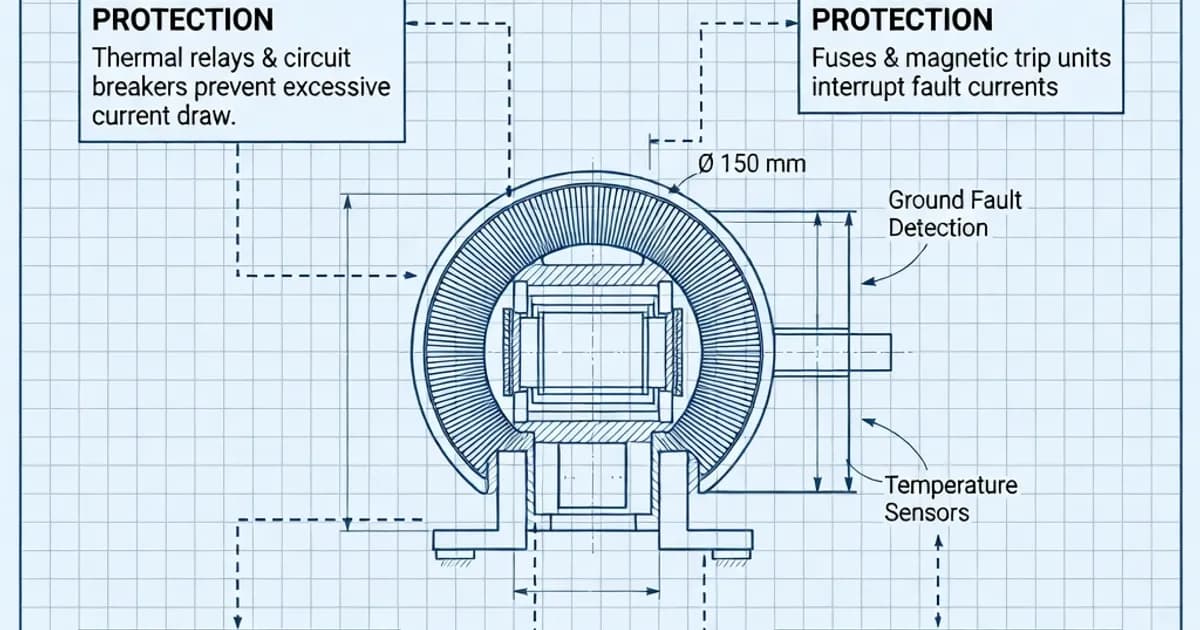
Understanding Motor Protection Methods
This article covers various methods of motor protection, including overloads, short circuits, and phase failure. Learn how to select and apply appropriate protection strategies.
Introduction to Motor Protection
Electric motors are crucial components in industrial systems, and protecting them from damage is vital for ensuring operational reliability. Motor protection methods are designed to prevent failures caused by electrical faults, overheating, or mechanical issues. In fact, motor protection systems can reduce failure rates by up to 50%, especially considering that 30% of industrial motors currently in operation are over 20 years old, exhibiting a 25% higher failure rate. This article will explore various protection methods, including overload relays, short circuit protection, and phase failure detection.
Overload Protection
Overload protection is essential for preventing motors from operating beyond their rated capacity. Overload relays are used to disconnect the motor from power supply when the current exceeds a predetermined level for an extended period. According to the IEC 60947-4-1 standard, overload relays must be selected based on the motor’s full-load current rating. Manufacturers like ABB recommend electronic overload relays, such as the MSR series, which can handle trip settings adjustable for overloads up to 800% In during motor starting. This flexibility helps in optimizing protection based on specific application needs.
Short Circuit Protection
Short circuits can cause severe damage to motors and connected equipment. Circuit breakers or fuses are commonly used to provide short circuit protection. IEC 60947-2 outlines the requirements for circuit breakers, which must trip quickly to limit damage. The selection of the appropriate rating is critical in preventing excessive current from damaging the motor windings. It is advisable to coordinate the circuit breaker ratings with motor protection devices to ensure effective protection; for instance, Schneider Electric recommends using circuit breakers with short-circuit withstand ratings up to 100 kA for enhanced safety.
Phase Failure Protection
Phase failure, or loss of one phase in a three-phase system, can lead to overheating and motor damage. Phase loss relays detect the absence of voltage in any of the phases and de-energize the motor to prevent failure. Implementing this protection method can extend the lifespan of the motor and improve system reliability. Notably, Siemens advises setting trip thresholds at 105-115% FLA for service factor 1.15 motors, along with enabling automatic reset after phase failure to enhance operational continuity.
Table of Motor Protection Devices
| Device | Purpose |
|---|---|
| Overload Relay | Protects against overload conditions |
| Circuit Breaker | Protects against short circuits |
| Phase Loss Relay | Detects phase failure |
Conclusion
Choosing the right motor protection methods is essential for maintaining the integrity and performance of electric motors. Familiarity with the standards and protective devices available can enhance system reliability and reduce downtime. In fact, a plant with 150 aging motors can save approximately USD 60,000 annually by preventing just three motor failures, highlighting the economic benefits of effective motor protection strategies.
References & Citations
- IEC 60947-4-1 — Official IEC source for motor starter and overload protection specifications.
- IEEE C37.96 Guide for AC Motor Protection — Authoritative IEEE resource on AC motor protection relaying practices.
- ABB Motor Protection Documentation — Manufacturer technical guides on relays and digital monitoring solutions for motor protection.
- Siemens Motor Starters Page — Detailed best practices for overload and fault protection in industrial applications.
- Electrical Engineering Portal on Motor Protection — Reputable industry resource explaining motor protection methods with NEC/IEC references.
Need help selecting the right component?
Related Categories
Frequently Asked Questions
Looking for a specific product?
Our team can help you find the right electrical components for your project.