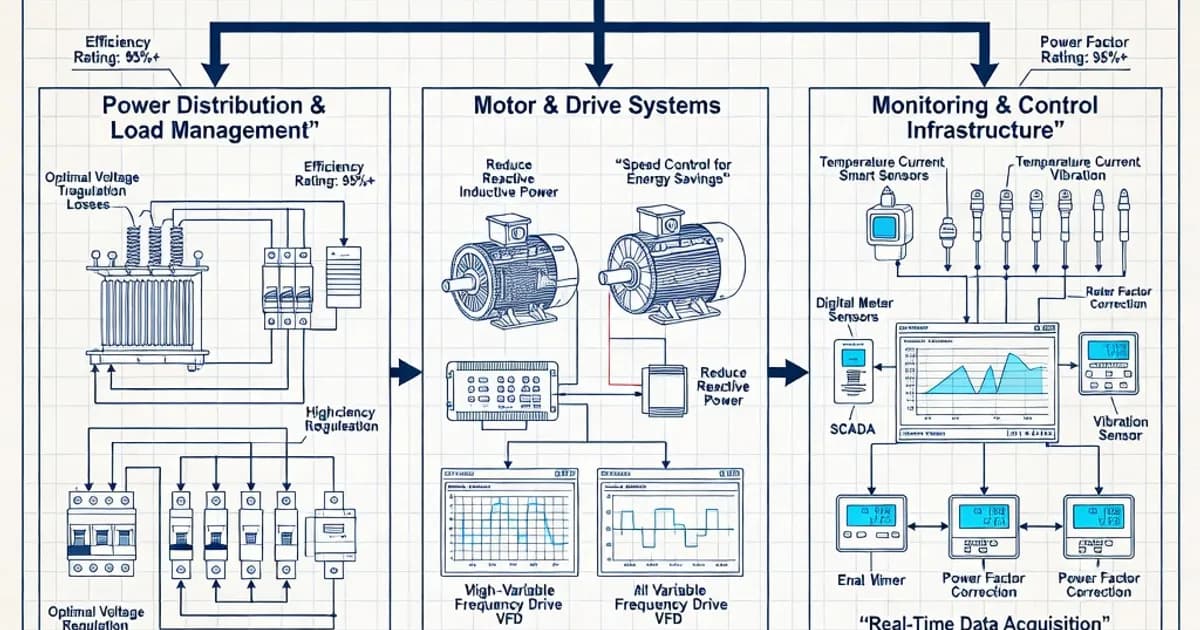
Energy Efficiency in Industrial Electrical Systems
Explore strategies for improving energy efficiency in industrial electrical systems, focusing on best practices and standards that promote sustainable practices.
Introduction to Energy Efficiency
Energy efficiency is crucial in industrial electrical systems to reduce operational costs, minimize environmental impact, and comply with regulations. Implementing energy-efficient practices can lead to significant savings and improved performance. For instance, U.S. energy productivity increased by 24.2% over the past decade, driven by efficiency technologies that boost economic output per unit of energy consumed.
Identifying Inefficiencies
The first step in enhancing energy efficiency is identifying inefficiencies within the system:
- **Conduct Energy Audits**: Regular audits help pinpoint areas where energy is wasted. Following the ISO 50001 framework can guide organizations in establishing effective energy management practices.
- **Monitor Equipment Performance**: Use meters and instruments to track energy consumption and identify underperforming equipment. Implementing predictive maintenance via IoT sensors can enhance monitoring capabilities.
Best Practices for Energy Efficiency
Implementing the following best practices can enhance energy efficiency:
- **Use Energy-Efficient Equipment**: Select motors, drives, and transformers that comply with energy efficiency standards, such as NEMA and IEC. For example, IEC 60034-30-1:2014 defines efficiency classes for industrial motors, mandating premium efficiency (IE3/IE4) for new installations.
- **Optimize Lighting**: Transition to LED lighting and utilize motion sensors to reduce unnecessary energy use. LED retrofits can achieve 50-70% energy savings compared to traditional lighting.
- **Implement Power Factor Correction**: Utilize capacitors to improve power factor, which can reduce energy costs from utility penalties. Achieving a power factor greater than 0.95 is recommended for industrial systems.
Standards and Regulations
Compliance with standards such as the ISO 50001 Energy Management System can guide organizations in establishing effective energy management practices. This standard provides a framework for continuous improvement in energy performance. Additionally, IEEE 841-2021 specifies high-efficiency motors for harsh industrial environments, targeting less than 2% energy loss.
Renewable Energy Integration
Incorporating renewable energy sources, such as solar and wind, can significantly enhance energy efficiency. These sources can offset energy consumption from traditional methods and reduce overall energy costs. Notably, renewables accounted for 93% of new capacity through July 2025, with solar and storage comprising 83%.
Conclusion
Enhancing energy efficiency in industrial electrical systems is not only beneficial for reducing costs but also vital for promoting sustainability. By adopting best practices and adhering to relevant standards, organizations can achieve significant improvements in energy performance. For instance, industrial heat pumps (IHPs) can achieve up to 90% energy-intensity reduction compared to traditional systems, showcasing the potential for substantial efficiency gains.
References & Citations
- IEC Standards Portal — Official IEC standards portal; search for IEC 60034-30-1 and IEC 61800-9-2 for motor and drive efficiency specifications in industrial systems.
- IEEE Xplore — IEEE Xplore database; access IEEE 841-2021 and IEEE 519-2022 for premium-efficiency motors and harmonic mitigation in electrical engineering.
- ABB Motors and Generators — ABB technical library; manufacturer documents on IE4/IE5 motors and energy audits for industrial electrification efficiency.
- Siemens Energy — Siemens Energy resources; guidelines on automation platforms and smart grids for manufacturing energy optimization.
- Electrical Engineering Portal — EEP industry publication; detailed articles on VFDs, audits, and standards like NEC Article 430 for practical industrial applications.
Need help selecting the right component?
Related Categories
Frequently Asked Questions
Looking for a specific product?
Our team can help you find the right electrical components for your project.